
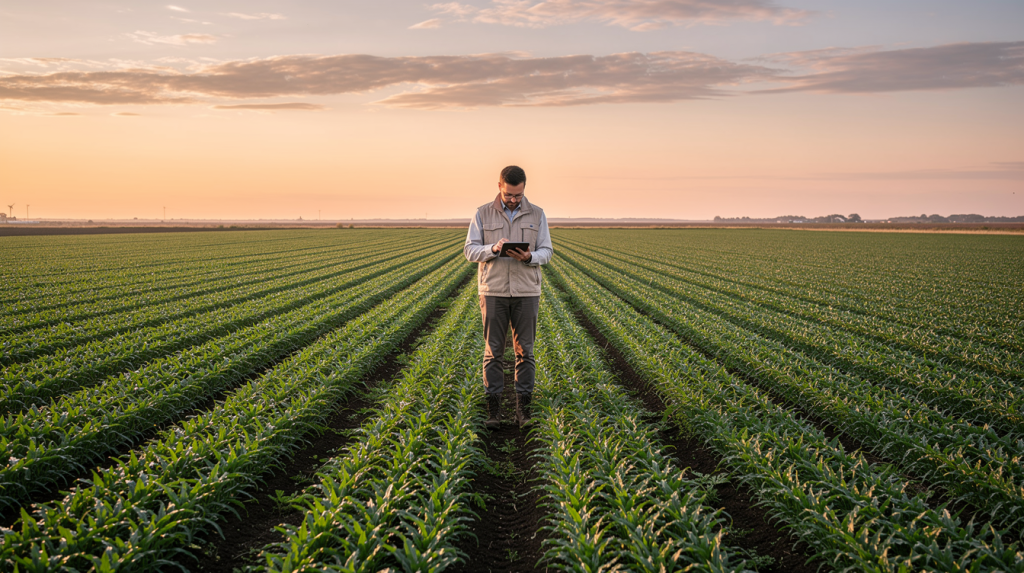
In agricultural research, the accuracy of data collected during field trials is paramount. Mobile devices have transformed this process, but they introduce a significant dependency: the need for a stable internet connection. Many research plots are situated in rural or remote areas where cellular service is unreliable or non-existent. This reality makes offline capability not just a convenient feature but a foundational requirement for any serious mobile field data collection system used in field trials.
Without the ability to function offline, researchers risk losing valuable observations, compromising data integrity, and creating inefficiencies that undermine the entire trial. The transition from paper notebooks to digital tools is meant to enhance accuracy and speed, but this advantage is lost if the tool fails the moment connectivity drops. True offline functionality ensures that data capture can continue seamlessly, regardless of location.
What Does "Offline Capability" Actually Mean for Mobile Data Collection?
The term "offline capability" can be interpreted in several ways, but in the context of professional field trials, it has a specific meaning. It is not merely about having an application that can display cached screens without an internet connection. True offline capability involves a robust system where the application can fully function—allowing data entry, editing, photo capture, and GPS tagging—while completely disconnected. This data is stored locally on the device in a secure and organized database, awaiting a connection to be synchronized with a central server.
Offline-capable vs. Offline-first: What's the Difference?
The distinction between "offline-capable" and "offline-first" is an important one. An offline-capable application is often designed with the internet as its primary mode of operation, with offline functionality added as a secondary feature. In contrast, an offline-first application is architected from the ground up with the assumption that connectivity will be intermittent or absent. For offline-first field trials software, local data storage and a reliable synchronization process are core components of its design, not afterthoughts. This approach ensures that the user experience is smooth and reliable in disconnected environments, which are the norm for many agricultural researchers.
The Store-and-Forward Workflow in Plain English
The mechanism behind effective offline data collection is often called a "store-and-forward" workflow. It is a simple but powerful concept. When a researcher enters data into a mobile device in the field, the application saves or "stores" that information directly onto the device's local memory. This includes all details, from trait scores to photos and timestamps. The data remains securely on the device. Later, when the researcher returns to a location with Wi-Fi or a stable cellular signal, the application can "forward" all the stored data to the central database. This process is managed by a synchronization engine that ensures all records are uploaded correctly without loss or duplication.
Why Is Offline Functionality a Necessity for Field Trials?
Field trials are defined by their controlled and consistent methodology. Data for each plot must be collected under similar conditions and at specific times to allow for valid comparisons. The absence of an internet connection cannot be a reason for delaying or skipping these crucial observations. Offline capability directly prevents data loss that can occur when a connection drops mid-entry. For instance, if a researcher is scoring dozens of plots for disease resistance, a single missing data point can invalidate comparisons for that entire set. Mobile field data collection in an offline mode eliminates the need to jot notes on paper or try to recall observations later, a practice that introduces significant human error.
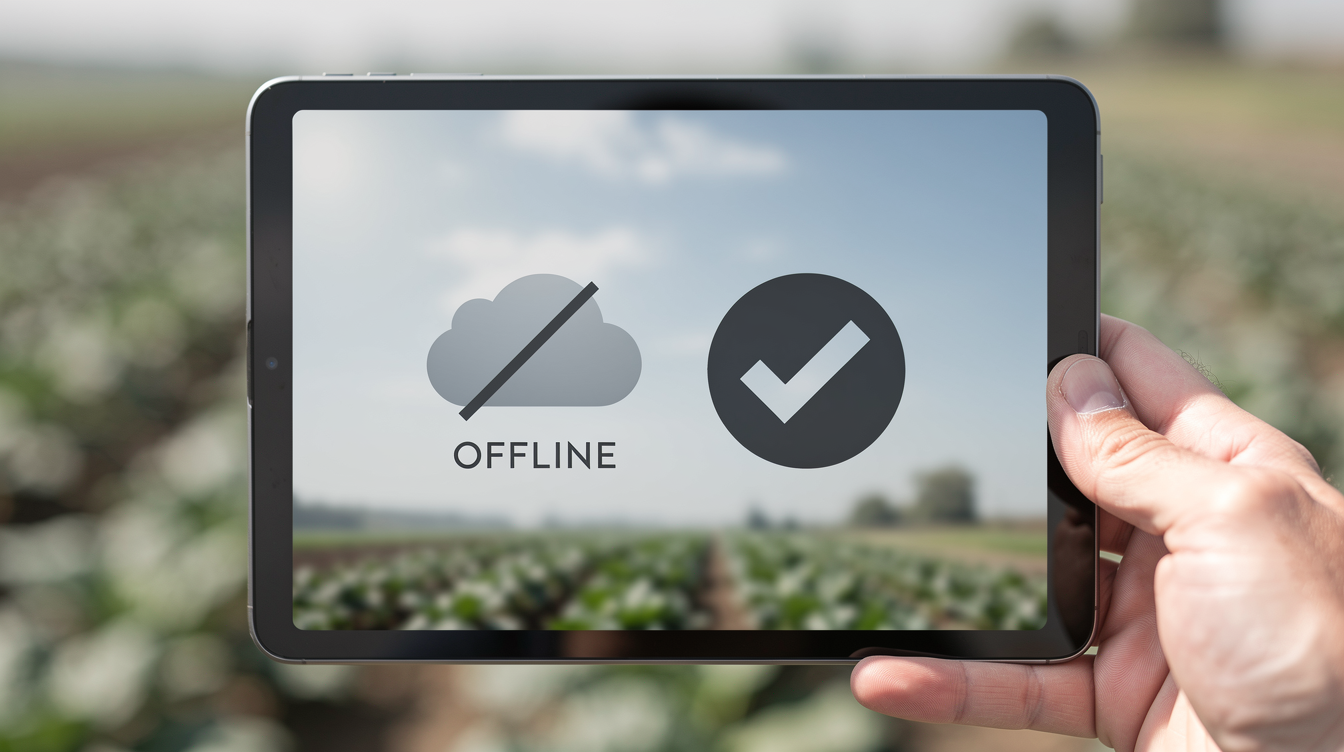
How Does Robust Offline Data Collection Work for Field Operations?
A typical workflow for robust offline data capture begins before a researcher even steps into the field. The first step involves preparation: using a stable internet connection to download all necessary information onto the mobile device. This can include trial maps, plot lists, trait definitions, and work orders. Once in the field, the researcher can operate the device in a fully disconnected state. They can navigate from plot to plot, enter observations, capture photos of anomalies, and record GPS coordinates. All this information is saved locally. At the end of the day or when connectivity is restored, the researcher initiates a sync process, which uploads all the new data to the central system. A well-designed offline data management system will handle this synchronization intelligently, managing conflicts and ensuring data integrity.
How Is Data Integrity Maintained With Offline Capabilities?
Ensuring data remains accurate and complete during offline collection and subsequent synchronization is a key challenge. Reliable systems employ several mechanisms to achieve this. Local autosave functionality is a basic requirement, ensuring that every data entry is saved to the device's database immediately, preventing loss if the app is accidentally closed. The user interface should also provide clear visual indicators showing which records are saved locally and which have been successfully synced. Furthermore, device-level safeguards like data encryption protect sensitive research information if a device is lost or stolen. A resumable sync process is also important; if a connection is lost mid-sync, the app should be able to pick up where it left off without creating duplicates.
Syncing Data: What Happens When You Reconnect?
When the device reconnects to the internet, the synchronization process begins. This is more complex than a simple upload. A robust sync engine will manage the merging of new data, handle potential edits made to the same record by different users, and provide a verifiable log confirming that all data was received by the server. This audit trail is essential for research credibility. The sync process should also be able to run in the background and handle partial connectivity, resuming automatically after interruptions. It must also efficiently manage attachments like photos, which can be large, ensuring they do not block the transfer of smaller, critical phenotypic data. A "last successful sync" timestamp gives users confidence that their work is safe.
Addressing Sync Conflicts and Data Duplicates
In collaborative research, it's possible for two users to unknowingly edit data for the same plot while offline. This creates a sync conflict. Software designed for field trial data collection must have clear rules to handle these situations. Silently overwriting one person's work is unacceptable. Solutions include locking a record once it is being edited, using a "last-write-wins" rule, or flagging conflicts for manual review. A complete change history, or audit trail, is non-negotiable, as it allows supervisors to see who changed what and when. Duplicate prevention is another key aspect, typically managed by using unique identifiers for each plot and having the sync process confirm receipt of each record before removing it from the device's upload queue.
What Features Should Researchers Look for in Field Trial Software?
When selecting field trials software, it is important to look beyond a simple "offline mode" checkbox. The true test of a system is its reliability under stress. Researchers at seed companies and universities should look for software that offers true offline-first access, strong data validation rules, and transparent synchronization logs. Unlike generic data collection tools, specialized field trials software integrates with trial design, plot genetics, and historical data, making season-over-season analysis possible. Essential considerations also include support for multi-user workflows, role-based permissions, and the ability to update data collection forms between seasons without disrupting access to historical trial data. Thoroughly testing offline readiness by rehearsing a full field day in airplane mode is a practical step before committing to a platform.
Evaluating Offline-First Field Trials Software: A Scorecard
Choosing the right software requires a structured evaluation. The following table provides a scorecard to assess whether a solution truly meets the demands of an offline-first workflow for agricultural research. It focuses on practical capabilities that directly impact data quality and operational efficiency in the field.
| Feature Category | Criteria for Evaluation | Why It Matters |
|---|---|---|
| Local Data Management | Does the app store all data (entries, photos, GPS) in a local, persistent database? Is data encrypted on the device? | Ensures data is not lost if the app closes or the device reboots. Protects sensitive research data. |
| UI and User Experience | Are there clear visual cues for sync status (saved locally, syncing, synced)? Can the user work without any interruptions or "no connection" errors? | Gives users confidence their data is safe and prevents confusion about what has been uploaded. |
| Synchronization Engine | Is the sync process resumable after interruption? Does it handle conflicts without data loss? Does it provide a detailed sync log? | Manages the complexities of intermittent connectivity and collaborative work, ensuring a complete audit trail. |
| Data Validation | Can custom validation rules (e.g., numeric ranges, controlled vocabularies) be enforced offline? | Improves data quality at the point of capture, reducing the need for extensive cleaning later. |
| Field Preparation | Can users pre-load all necessary assets for offline use, including trial lists, plot maps, and image-based scoring guides? | Guarantees that all required information is available in the field, even with zero connectivity. |
Does offline mode still timestamp my entries correctly?
Yes, a well-designed application will capture the device's local time when an entry is created or modified. When the data is synchronized, it is best practice for the system to record both the original device timestamp and the server's sync timestamp. This provides a clear and accurate audit trail of when the observation was actually made versus when it was uploaded.
What if a device is lost before syncing?
Data loss is a real risk if a device is lost before synchronization. To mitigate this, professional systems should support device-level data encryption and require user logins. This prevents unauthorized access to the data. Operationally, research teams should implement a policy of syncing devices at least once daily to minimize the amount of un-synced data at risk at any given time.
Why do some "offline" apps still fail in the field?
Failures often occur when an application is merely "offline-capable" rather than "offline-first." Common causes include forms or lists that were not properly cached for offline use, authentication processes that require an internet connection to log in, large attachments blocking the entire sync queue, or a synchronization process that cannot resume after an interruption and corrupts the local data queue.
How do I avoid duplicate plot records after syncing?
Effective offline systems prevent duplicates through several mechanisms. They use unique plot identifiers to ensure each record is distinct. The synchronization protocol should include a confirmation step, where the server acknowledges receipt of a record before the mobile app marks it as successfully synced. This prevents the app from attempting to re-upload the same data if the connection is briefly interrupted after the data was sent but before confirmation was received.
About the Business
Phenome Networks provides advanced solutions designed to optimize agricultural research and development. Their comprehensive variety testing software streamlines data collection, analysis, and decision-making for seed companies, plant breeders, agricultural researchers, and universities worldwide. The platform is built to ensure data integrity and efficiency, empowering users to manage complex trials effectively, even in the challenging and often disconnected conditions of field research.